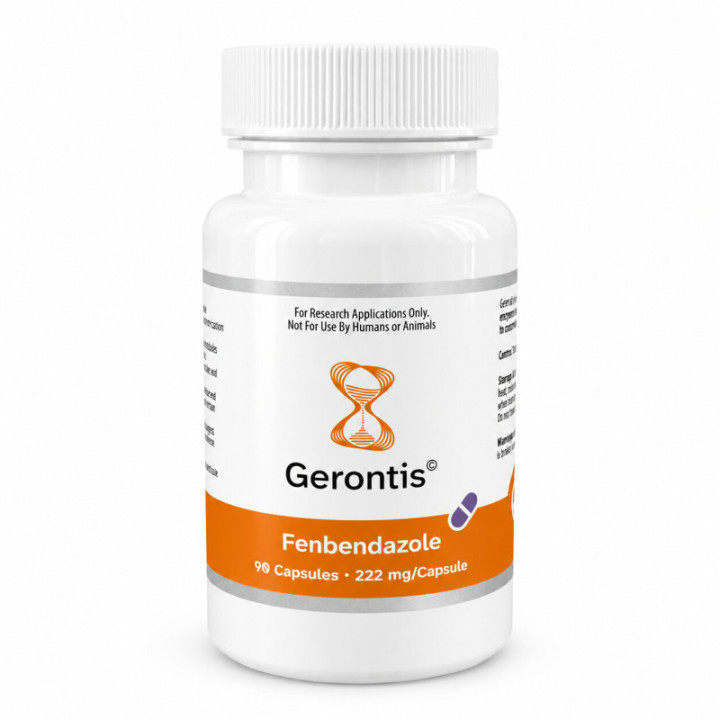
Fenbendazole Gerontis — 90 Capsules
This product listing features a complete bottle containing 90 capsules of Fenbendazole. This standardized volume is optimized to provide a highly precise and consistent supply for continuous evaluation, multi-cycle research, and therapeutic modeling within advanced oncology and metabolic longevity frameworks.
General Pharmaceutical & Chemical Information
- Active Ingredient: Fenbendazole
- Dosage: 222 mg of Fenbendazole per capsule
- Purity: 99%+ Purity (Lab Tested, Pharmaceutical Grade)
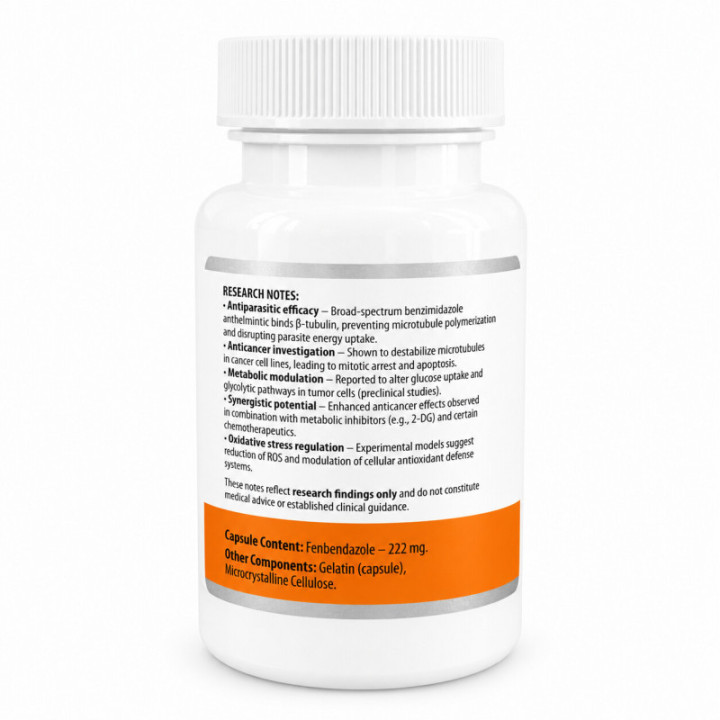
- Bulking Agent: Microcrystalline Cellulose (MCC)
- Capsule Shell: Gelatin
- Package Size: 1 Bottle (90 capsules)
- CAS Number: 43210-67-9
- Molecular Formula: C15H13N3O2S
- Form: Small-molecule compound enclosed in capsules with MCC bulking agent
- Application: For Research Applications Only.
Primary Therapeutic Focus: Oncology Prevention & Management (Deep Molecular Mechanisms)
Fenbendazole is highly regarded in translational oncology and drug-repurposing research due to its ability to simultaneously target several hallmark vulnerabilities of cancer. Unlike single-target therapies that often trigger rapid drug resistance, Fenbendazole exerts a pleiotropic (multi-pathway) antitumor effect:
1. Severe Disruption of Tumor Glycolysis (Reversing the Warburg Effect)
Malignant cells are highly dependent on accelerated glucose consumption to fuel their rapid division (the Warburg Effect). Fenbendazole systematically starves tumor cells by disrupting this metabolic pathway:
- Inhibition of Glucose Transporters (GLUT): Fenbendazole downregulates the expression of key glucose transporter proteins, such as GLUT4, drastically reducing the influx of glucose across the cancer cell membrane.
- Hexokinase II (HKII) Suppression: It directly inhibits the enzymatic activity and transcription of Hexokinase II—the critical first rate-limiting enzyme that traps glucose inside cells and commits it to glycolysis.
- Reduction of Lactate and Acidification: By halting glycolysis upstream, it leads to a subsequent drop in intracellular and extracellular lactate production. This reduces microenvironmental acidification, which is a known driver of metastatic invasion and chemoresistance.
2. Dual Apoptotic and Pyroptotic Signaling Pathways
Fenbendazole triggers highly coordinated programmed cell death pathways:
- p53-Mediated Apoptosis: It induces the mitochondrial translocation of the p53 tumor suppressor protein, activating the p53-p21 pathway. This causes mitochondrial outer membrane permeabilization, caspase-3 activation, and poly (ADP-ribose) polymerase (PARP) cleavage, triggering apoptosis.
- Induction of Pyroptosis (Caspase-3/GSDME Pathway): Emerging research demonstrates that Fenbendazole can induce pyroptosis (a highly immunogenic, inflammatory cell death). It suppresses HK2, leading to the activation of the caspase-3/GSDME (Gasdermin E) pathway. The cleaved GSDME forms pores in the cell membrane, causing cell swelling, lysis, and the release of inflammatory cytokines (like IL-1β and IL-18), which actively alerts and recruits the host immune system to the tumor site.
3. Microtubule Dynamics Disruption (Metaphase Arrest)
Fenbendazole behaves as a moderate microtubule-destabilizing agent. It selectively binds to the colchicine-binding site of β-tubulin, hindering tubulin polymerization and partially altering the spindle framework during cell division. This leads to spindle assembly checkpoint activation, arresting tumor cells in the G2/M phase and inducing mitotic catastrophe in actively dividing cells.
4. Overcoming Chemoresistance (Ferroptosis & P-gp Evasion)
- Ferroptosis in Chemoresistant Cells: In multi-drug-resistant cancer cells (such as 5-FU-resistant lines), Fenbendazole has been shown to induce cell death via ferroptosis—an iron-dependent form of regulated cell death—by downregulating key protective antioxidant proteins like GPX4 and SLC7A11.
- Evasion of P-gp Pumps: Unlike traditional microtubule-targeting chemotherapies (such as paclitaxel or vincristine), benzimidazoles like Fenbendazole bypass the P-glycoprotein (P-gp) efflux pumps, preventing the tumor from pumping the drug out of the cell.
Anti-Aging & Longevity Properties (Geroprotection)
Beyond its heavy focus on oncotherapy, Fenbendazole’s systemic metabolic changes align closely with key longevity goals:
- Stress Pathway Modulation: It activates the MEK3/6-p38MAPK pathway, elevating cellular antioxidant defenses and protecting cells from chronic oxidative damage.
- Autophagy Promotion: The energetic stress resulting from glucose starvation and mTOR-related adjustments triggers systemic autophagy, encouraging tissues to clear out damaged proteins and cellular debris.
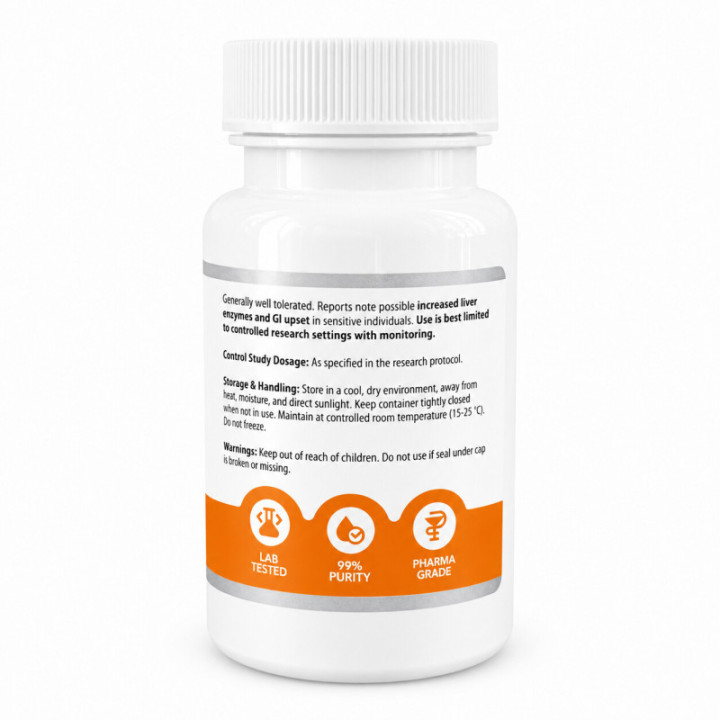
Strict Regulatory Disclaimer: This product is intended solely for laboratory research, in vitro evaluation, and analytical purposes. We do not provide medical advice, recommend specific protocols, or guarantee any therapeutic results. Nothing stated herein should be construed as a medical recommendation or a guarantee of efficacy in treating, curing, or preventing any disease, including cancer. Any practical application of this compound must be strictly validated by independent research and overseen by a qualified professional.

Comments (0)
Your review appreciation cannot be sent
Report comment
Report sent
Your report cannot be sent